Research peptides · Specialized research compounds
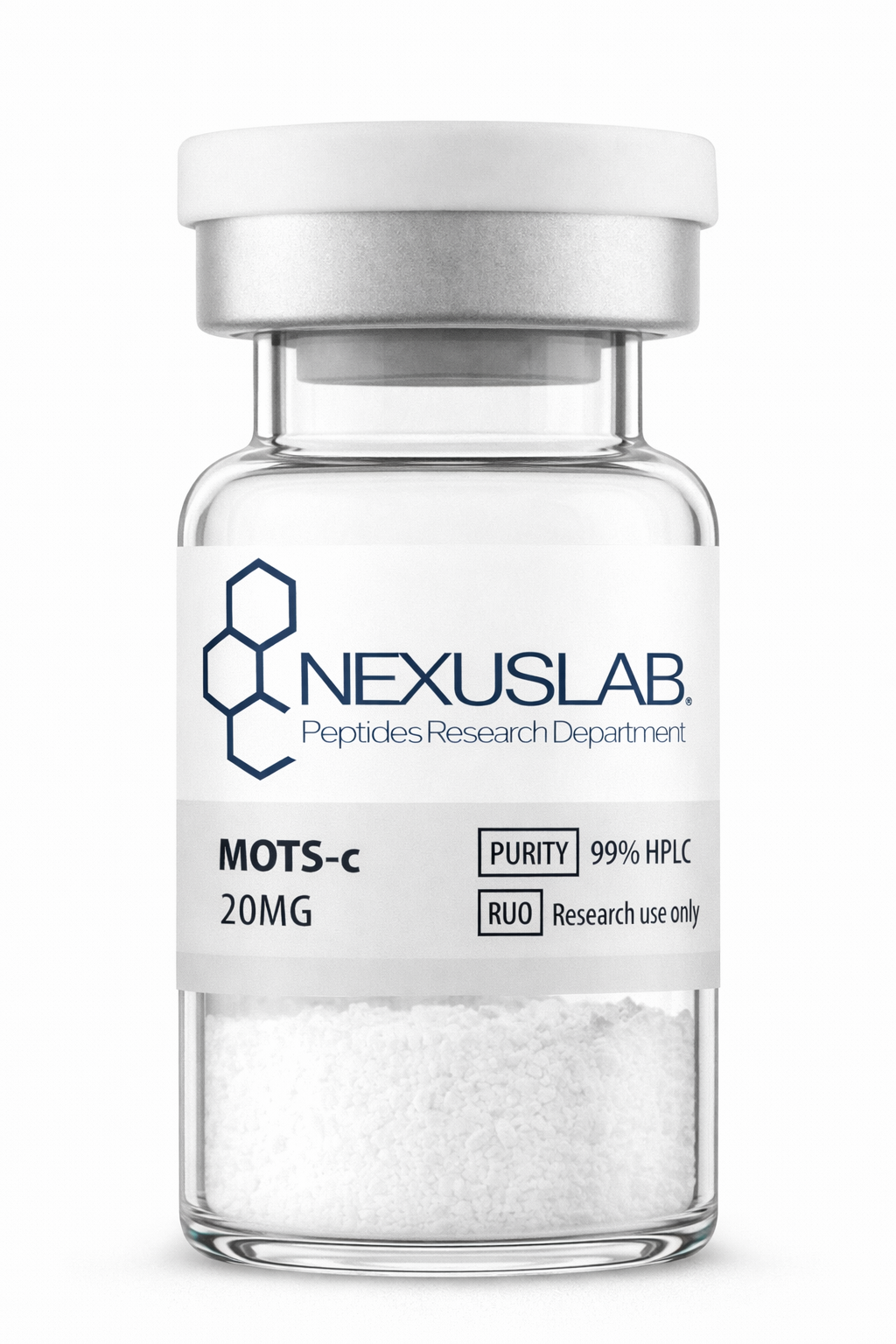
MOTS-c
Available documentary data and items still to verify are detailed below.
Price incl. VAT€90.00
AvailabilityAvailable
SKUMOTS-c
Loading availability…
 0
0
Research peptides · Specialized research compounds
Available documentary data and items still to verify are detailed below.
Loading availability…
02 — Information to verify
MOTS-c is a 16-amino-acid peptide associated with the mitochondrial 12S ribosomal RNA region. Research examines its role in communication between mitochondria and the nucleus and in cellular adaptation to metabolic stress.
Technical data
Format: 20 mg. Reference sequence: MRWQEMGYIFYPRKLR.
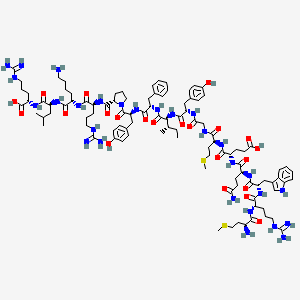
Reference molecular data.
Proposed pathways include links between the folate–methionine cycle, AICAR accumulation, and AMPK signalling. The cited studies examine muscle differentiation in vitro and the functions of pancreatic alpha and beta cells. These experimental observations are not therapeutic indications or guaranteed product outcomes.
MOTS-c belongs to research on mitochondria-derived peptides. The proposed folate–methionine-cycle, AICAR, and AMPK connection links nucleotide metabolism with energy sensing. Cellular location and stress conditions are essential parts of the model, not properties established from sequence alone.
The 2022 study compares MOTS-c with its Y8F variant in human LHCN-M2 and mouse C2C12 muscle cells. The reference peptide increases myotube formation, whereas the variant does not reproduce this finding. Myogenin and STAT3 transcriptional activity following IL-6 stimulation are also examined.
A 2024 study examines INS-1E beta cells and αTC-1 alpha cells. The authors report lower insulin secretion and expression in the former and greater glucagon secretion and expression in the latter. Viability, apoptosis, and responses to glucose and fatty acids are also assessed, showing a more complex picture than a generic metabolic improvement.
Bone-metabolism literature considers the balance between formation and resorption, cell differentiation, and energy signals. The studies collected in the review distinguish osteoblasts, osteoclasts, and animal models. Links with AMPK and oxidative stress are discussed as mechanisms to evaluate within each experimental system.
Separate studies examine radiation pneumonitis involving Nrf2 signalling and a mouse model of inflammatory pain hypersensitivity. Oxidative markers and lung injury matter in the former; central and peripheral pain responses in the latter.
Catalog of products presented for research activities. Not for human or veterinary use. This notice does not replace verification of applicable rules.