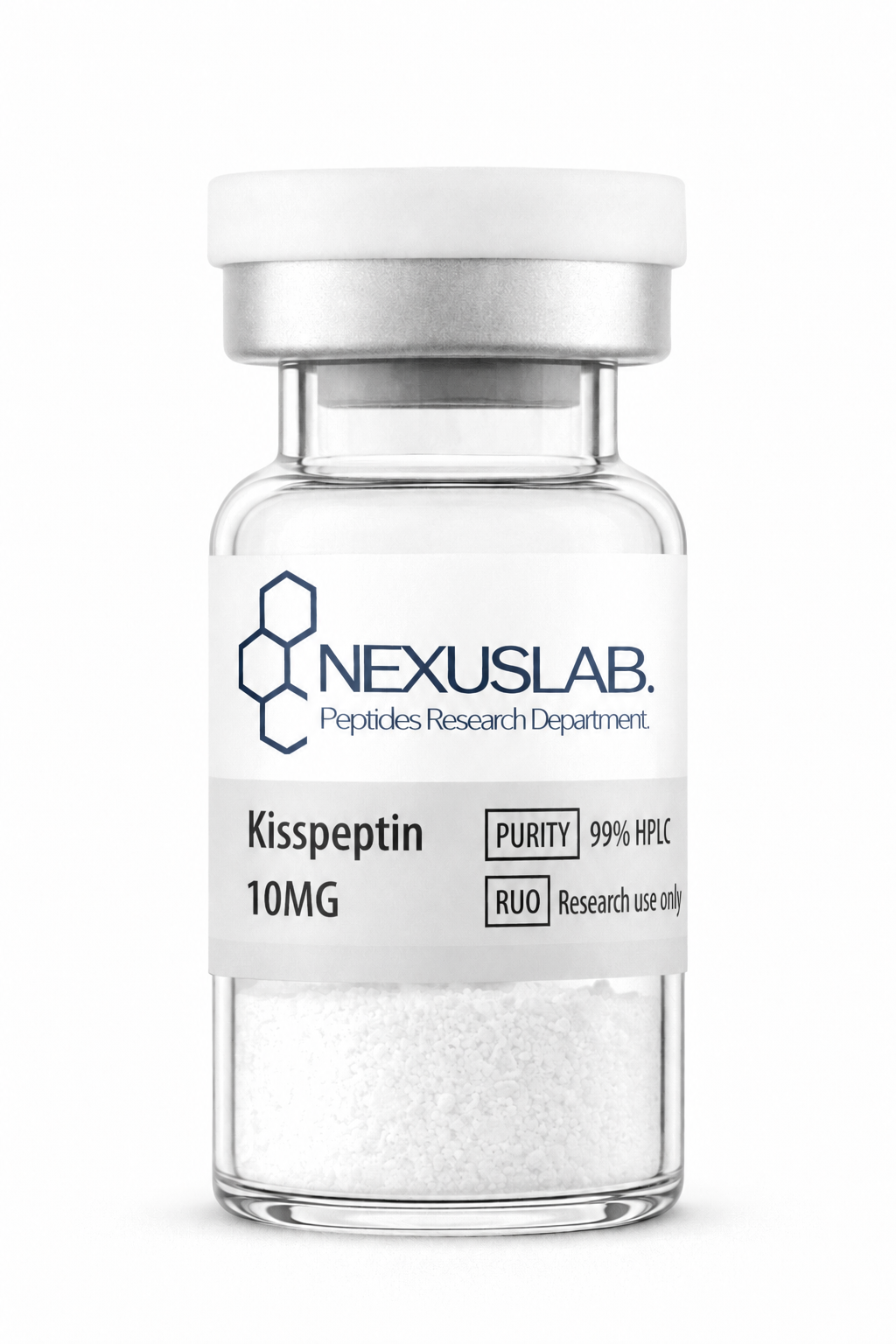
Peptide research
Kisspeptin
Available documentary data and items still to verify are detailed below.
Preorder · dispatch within 30 days after payment is credited.
Price incl. VAT€55.00
AvailabilityPreorder
SKUNL-KISSPEPTIN-10MG
Loading availability…
 0
Peptide research
Available documentary data and items still to verify are detailed below.
Preorder · dispatch within 30 days after payment is credited.
Loading availability…
02 — Information to verify
Kisspeptin-10 (KP-10) is the C-terminal decapeptide fragment of the kisspeptin family derived from the KISS1 gene product. It is investigated as a ligand of the KISS1R receptor, also known as GPR54. Format: 10 mg of lyophilized powder per vial.
Technical data
The number 10 in Kisspeptin-10 denotes ten amino acids; 10 mg instead denotes nominal mass per vial. The human reference sequence is YNWNSFGLRF-NH₂, with an amidated C terminus. KP-10 and Kisspeptin-54 differ in sequence and molecular weight.
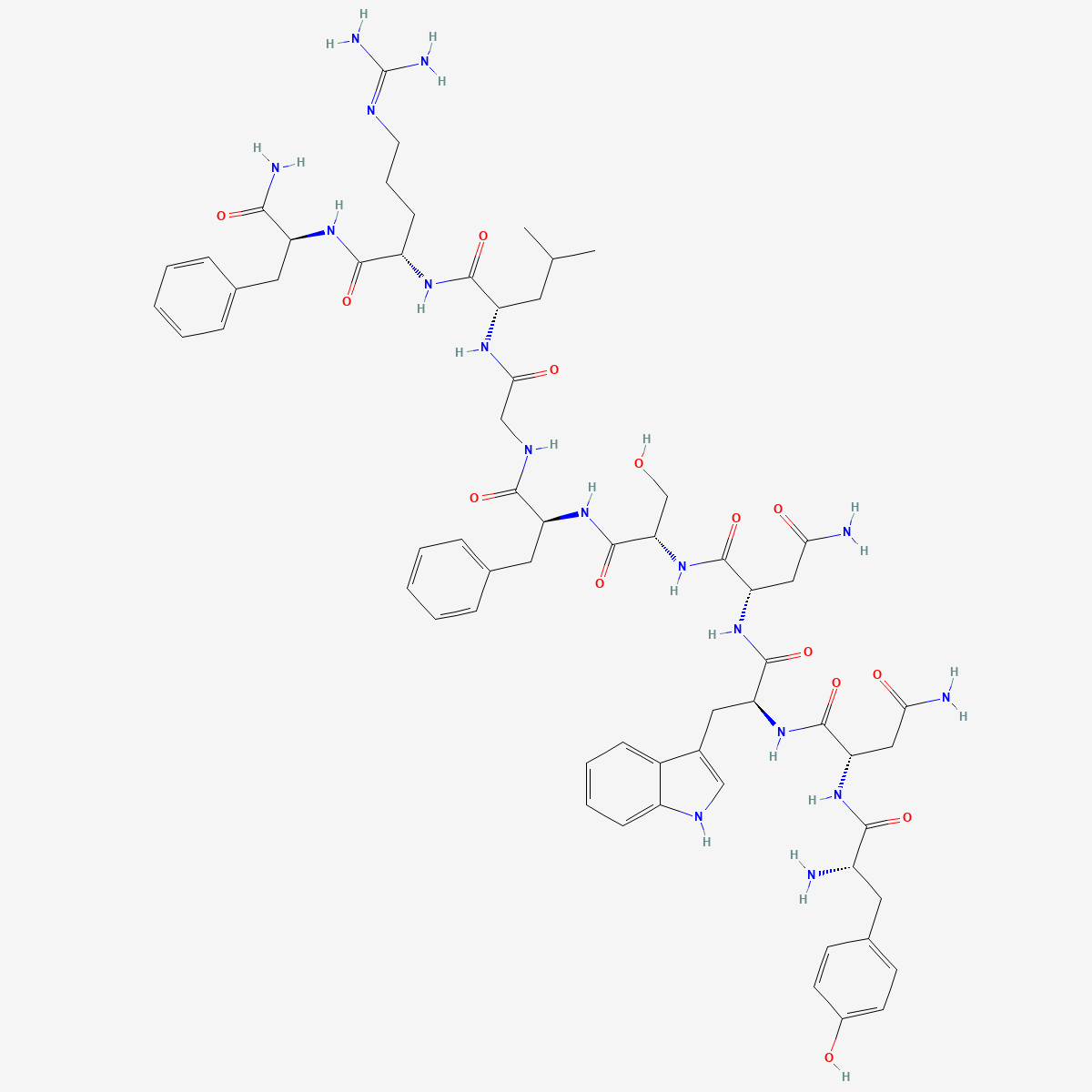
Reference molecular data.
The kisspeptin/KISS1R system is studied in neuroendocrine signalling and regulation of the hypothalamic-pituitary-gonadal axis. Research includes ligand-receptor interactions and cellular responses. Properties described in the literature do not establish therapeutic indications for this product.
The KISS1 gene product gives rise to peptides of different lengths sharing an active C-terminal region. KP-10 is the ten-residue fragment of human kisspeptin with an amidated terminal phenylalanine. This identity distinguishes it from KP-13, KP-14 and KP-54.
KISS1R is a G-protein-coupled receptor historically called GPR54. Kisspeptin-family studies investigated receptor binding, calcium mobilization and intracellular signalling. Such measurements distinguish target interaction from effects on the neuroendocrine system as a whole.
The kisspeptin/KISS1R system participates in GnRH neuron regulation and the reproductive axis. Species, cell type and physiological state influence response interpretation. Findings obtained with longer peptides should not automatically be assigned to KP-10 under the same conditions.
Comparing materials from different suppliers requires checking KP-10 identity and terminal amidation as well as mg content. The label “Kisspeptin 10 mg” alone does not establish peptide length.
Molecular data describe the reference compound. Identity, content and purity of the supplied material must be checked against its batch certificate. This page does not attribute another supplier’s tests or results to this product. For laboratory research only; not for human or veterinary use.
Original study of kisspeptins as GPR54 ligands and their responses in cell systems.
IUPHAR review: peptide forms, receptor distribution and neuroendocrine context.
It indicates nominal mass per vial, not an mg/ml concentration or an instruction for use. In the blend, 10+3 mg identifies the two components separately.
The PubChem figure depicts the reference compound. Identity, chemical form, content and purity of actual material require documentation for the corresponding batch.
Consult the label, safety data sheet and batch-specific instructions. Molecular properties alone do not establish an expiry date or an after-opening lifetime for this product.
Catalog of products presented for research activities. Not for human or veterinary use. This notice does not replace verification of applicable rules.