Peptide research
DSIP
Available documentary data and items still to verify are detailed below.
Preorder · dispatch within 30 days after payment is credited.
Price incl. VAT€65.00
AvailabilityPreorder
SKUNL-DSIP-10MG
Loading availability…
 0
Peptide research
Available documentary data and items still to verify are detailed below.
Preorder · dispatch within 30 days after payment is credited.
Loading availability…
02 — Information to verify
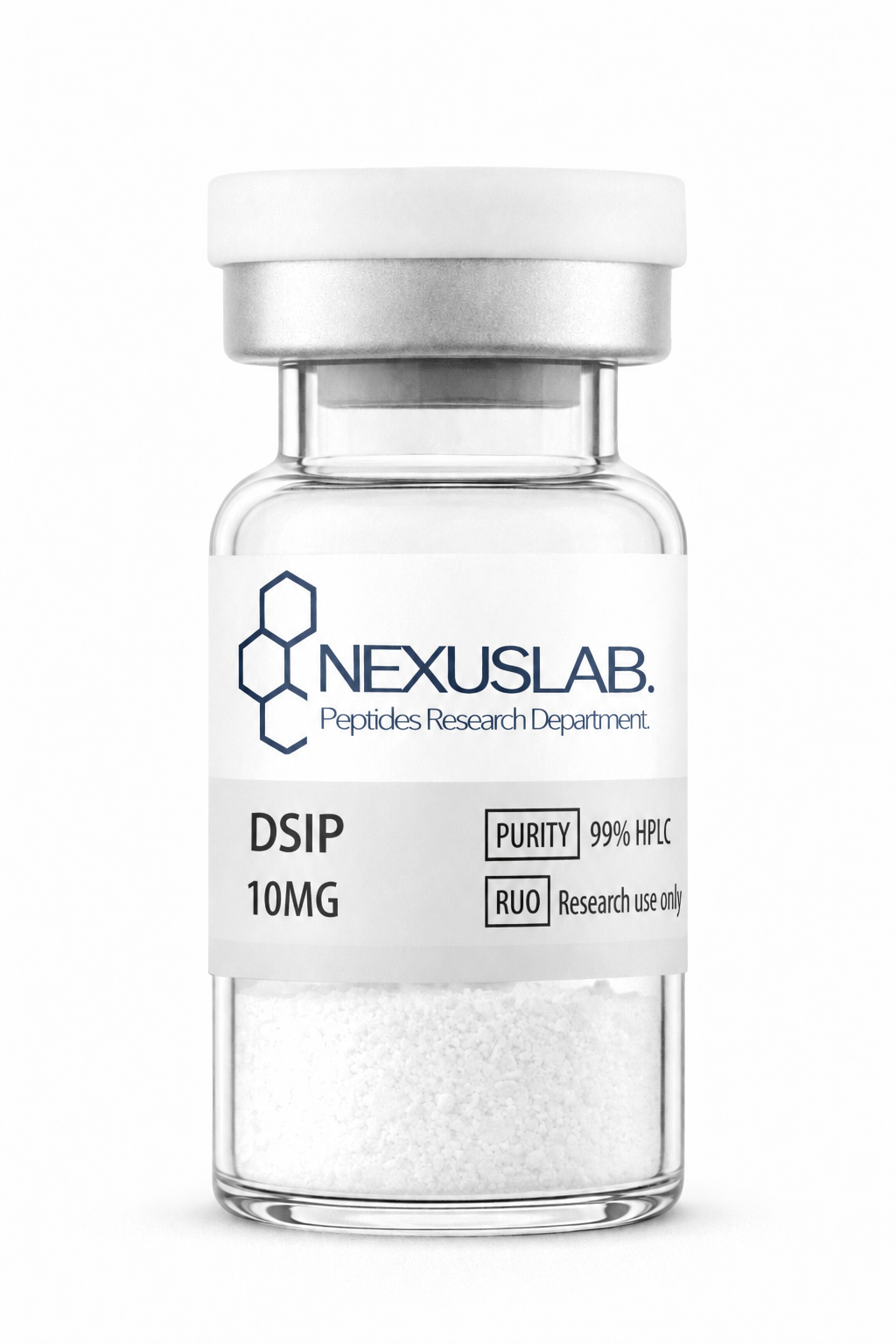
DSIP (Delta Sleep-Inducing Peptide) is a nonapeptide investigated in neurophysiology. The proposed format contains 10 mg per vial as lyophilized powder. Its name originates from experimental studies of slow-wave EEG activity.
Technical data
The reference sequence contains nine amino acids: Trp-Ala-Gly-Gly-Asp-Ala-Ser-Gly-Glu (WAGGDASGE). The 10 mg format denotes nominal mass per vial rather than a solution concentration.
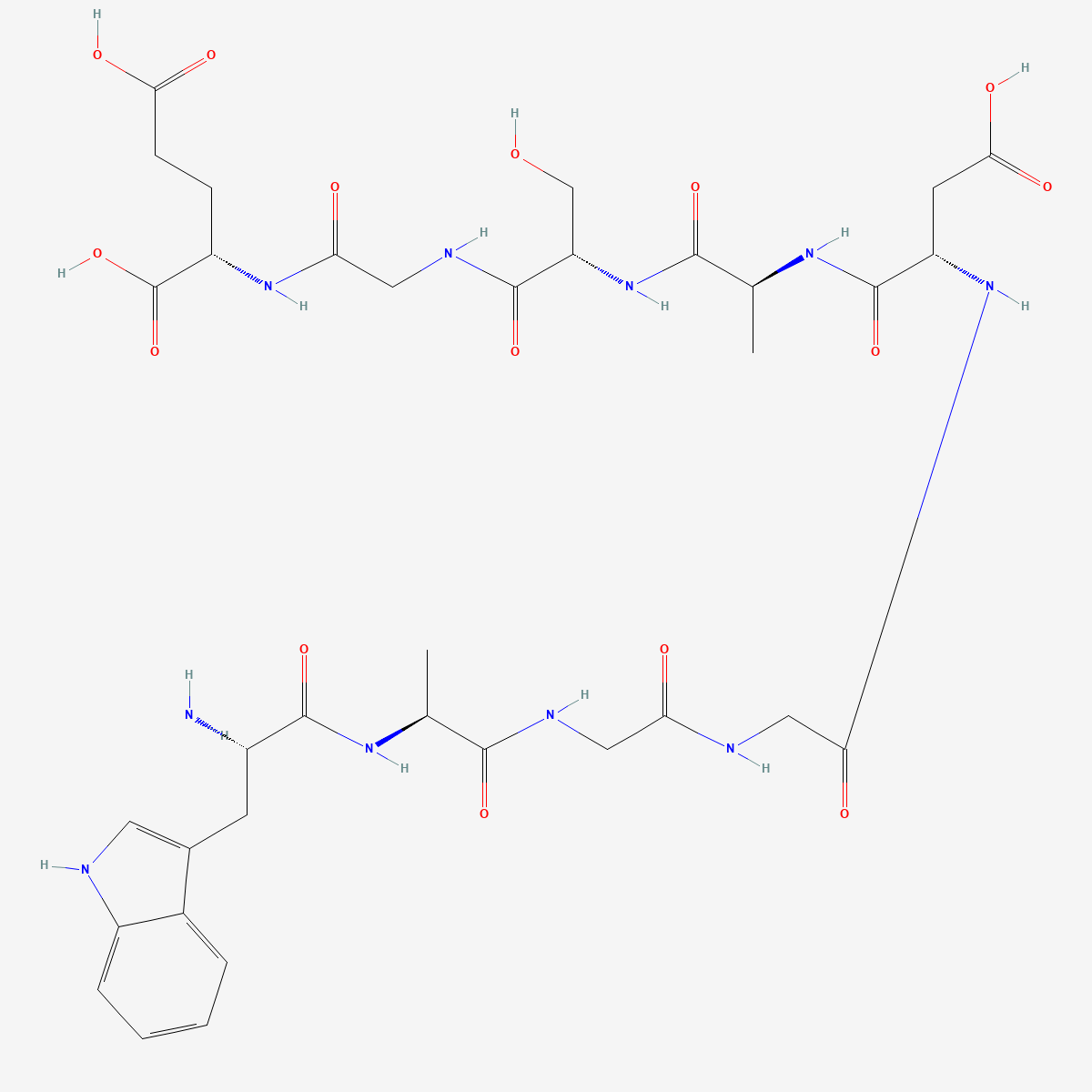
Reference molecular data.
Early publications describe isolation, synthesis and EEG evaluation in animal models. They establish the compound’s historical research context, without demonstrating that this commercial material treats insomnia or improves sleep in people.
DSIP was characterized in the 1970s through sleep experiments in rabbits. Early work compared isolated peptide, synthetic material and sequence fragments using electroencephalographic recordings, connecting a defined chemical identity with observable neurophysiological measurements.
Delta activity is a low-frequency component of the EEG signal. Experiments describe recording and behavioural changes in the model studied. Increased delta activity alone is not a measure of sleep quality, and the peptide’s name does not establish a single demonstrated receptor mechanism.
Enzymatic degradation is distinct from biological activity. In-vitro studies examined DSIP and analogues in brain extracts. Comparing samples therefore benefits from documenting sequence integrity, possible degradation products and experimental conditions rather than attributing every signal to intact peptide.
DSIP should be distinguished from modified analogues and sequence fragments. Analytical planning separates sequence, chemical form and the mass actually measured in a batch.
Molecular data describe the reference compound. Identity, content and purity of the supplied material must be checked against its batch certificate. This page does not attribute another supplier’s tests or results to this product. For laboratory research only; not for human or veterinary use.
Isolation of the nonapeptide and EEG comparison with synthetic forms in an animal model.
Study of peptide and analogues in brain extracts, relevant to experimental stability.
It indicates nominal mass per vial, not an mg/ml concentration or an instruction for use. In the blend, 10+3 mg identifies the two components separately.
The PubChem figure depicts the reference compound. Identity, chemical form, content and purity of actual material require documentation for the corresponding batch.
Consult the label, safety data sheet and batch-specific instructions. Molecular properties alone do not establish an expiry date or an after-opening lifetime for this product.
Catalog of products presented for research activities. Not for human or veterinary use. This notice does not replace verification of applicable rules.