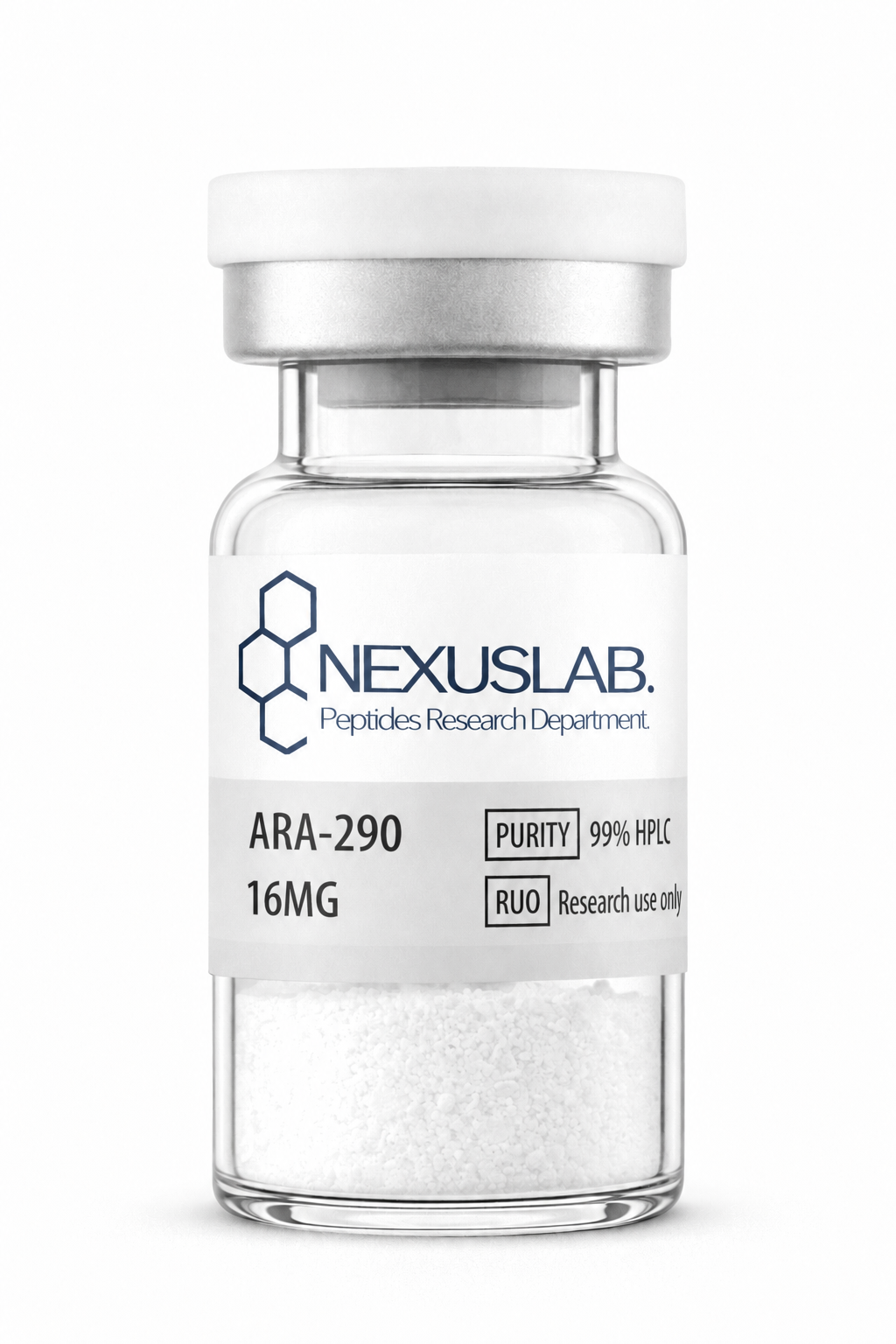
Peptide research
ARA-290
Available documentary data and items still to verify are detailed below.
Preorder · dispatch within 30 days after payment is credited.
Price incl. VAT€55.00
AvailabilityPreorder
SKUNL-ARA-290-16MG
Loading availability…
 0
Peptide research
Available documentary data and items still to verify are detailed below.
Preorder · dispatch within 30 days after payment is credited.
Loading availability…
02 — Information to verify
ARA-290, also called cibinetide, is a synthetic 11-amino-acid peptide designed from a structural region of erythropoietin (EPO). Research investigates cellular injury responses and signalling associated with the innate repair receptor (IRR). Format: 16 mg per vial as lyophilized powder.
Technical data
The reference sequence is pGlu-Glu-Gln-Leu-Glu-Arg-Ala-Leu-Asn-Ser-Ser. Its first residue is pyroglutamate. ARA-290 is not the full EPO hormone: the literature describes it as a non-erythropoietic derivative.
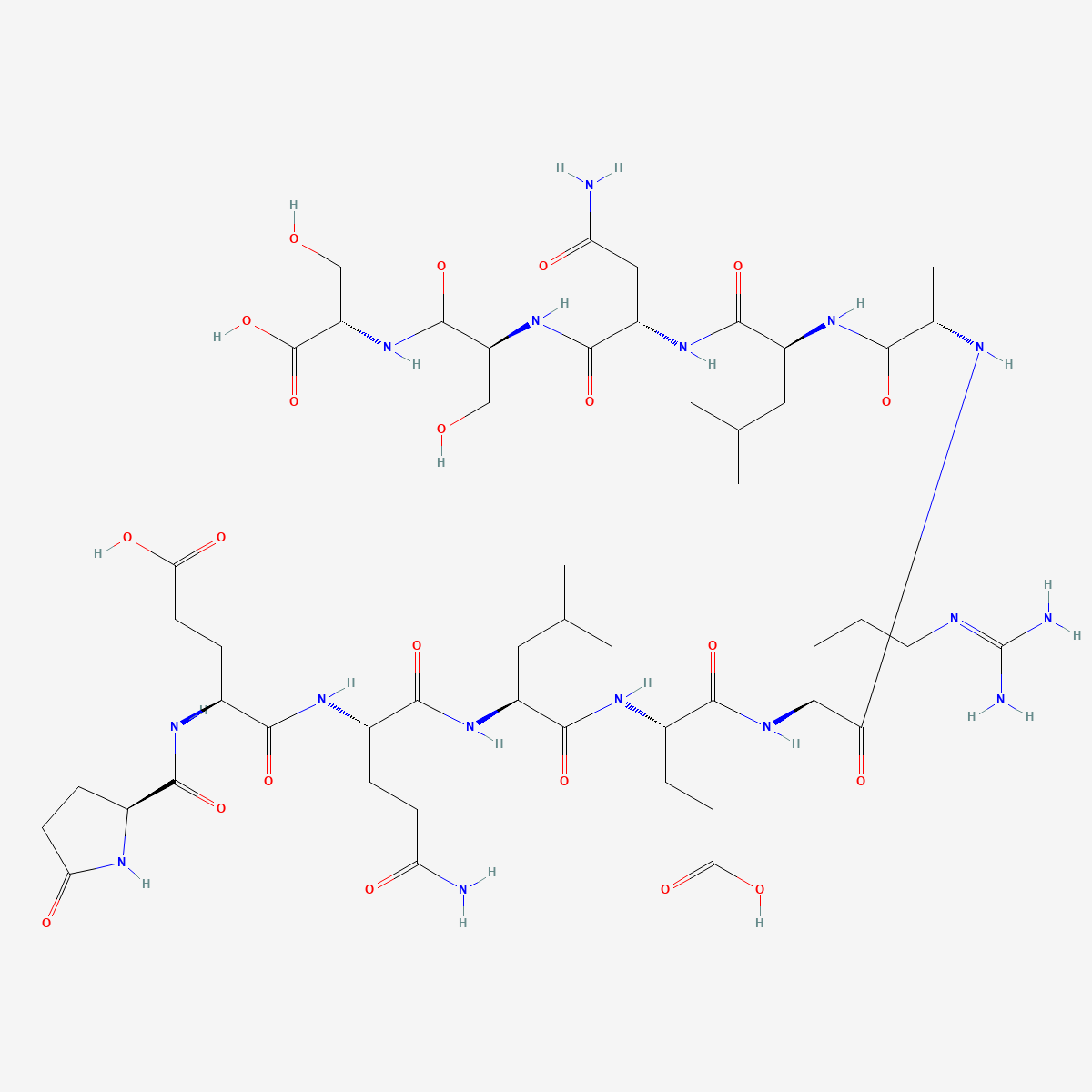
Reference molecular data.
The cited publications discuss experimental inflammation models, IRR signalling and small nerve fibre abnormalities. They include preclinical findings and specific clinical investigations, without establishing efficacy or safety of this commercial material in people.
ARA-290 was designed from a surface in erythropoietin’s helix-B region. The name pHBSP means pyroglutamate helix B surface peptide. Its shortened sequence is of interest in tissue-protection research, distinct from full EPO and its erythropoietic activity.
The literature describes IRR as a complex involving the EPO receptor and the common β subunit CD131. Research examines its participation in cellular responses to injury or inflammation, a context distinct from red blood cell production.
Research includes nerve-injury models and exploratory clinical studies of small-fibre abnormalities. Reported endpoints include morphological measurements and symptoms and must be interpreted within each study’s design. This research vial is not equated with the investigational materials used in those studies.
The pGlu notation identifies the cyclic N-terminal group. Technical descriptions should retain this feature and distinguish it from an unmodified glutamine sequence. Biological findings depend on the model and experimental conditions.
Molecular data describe the reference compound. Identity, content and purity of the supplied material must be checked against its batch certificate. This page does not attribute another supplier’s tests or results to this product. For laboratory research only; not for human or veterinary use.
Placebo-controlled sarcoidosis study assessing corneal fibres and symptoms in a specific population.
Review of mechanisms, preclinical models and exploratory evidence concerning the IRR system.
It indicates nominal mass per vial, not an mg/ml concentration or an instruction for use. In the blend, 10+3 mg identifies the two components separately.
The PubChem figure depicts the reference compound. Identity, chemical form, content and purity of actual material require documentation for the corresponding batch.
Consult the label, safety data sheet and batch-specific instructions. Molecular properties alone do not establish an expiry date or an after-opening lifetime for this product.
Catalog of products presented for research activities. Not for human or veterinary use. This notice does not replace verification of applicable rules.